Borders that make no sense
Six places where the map of Italy stopped agreeing with itself
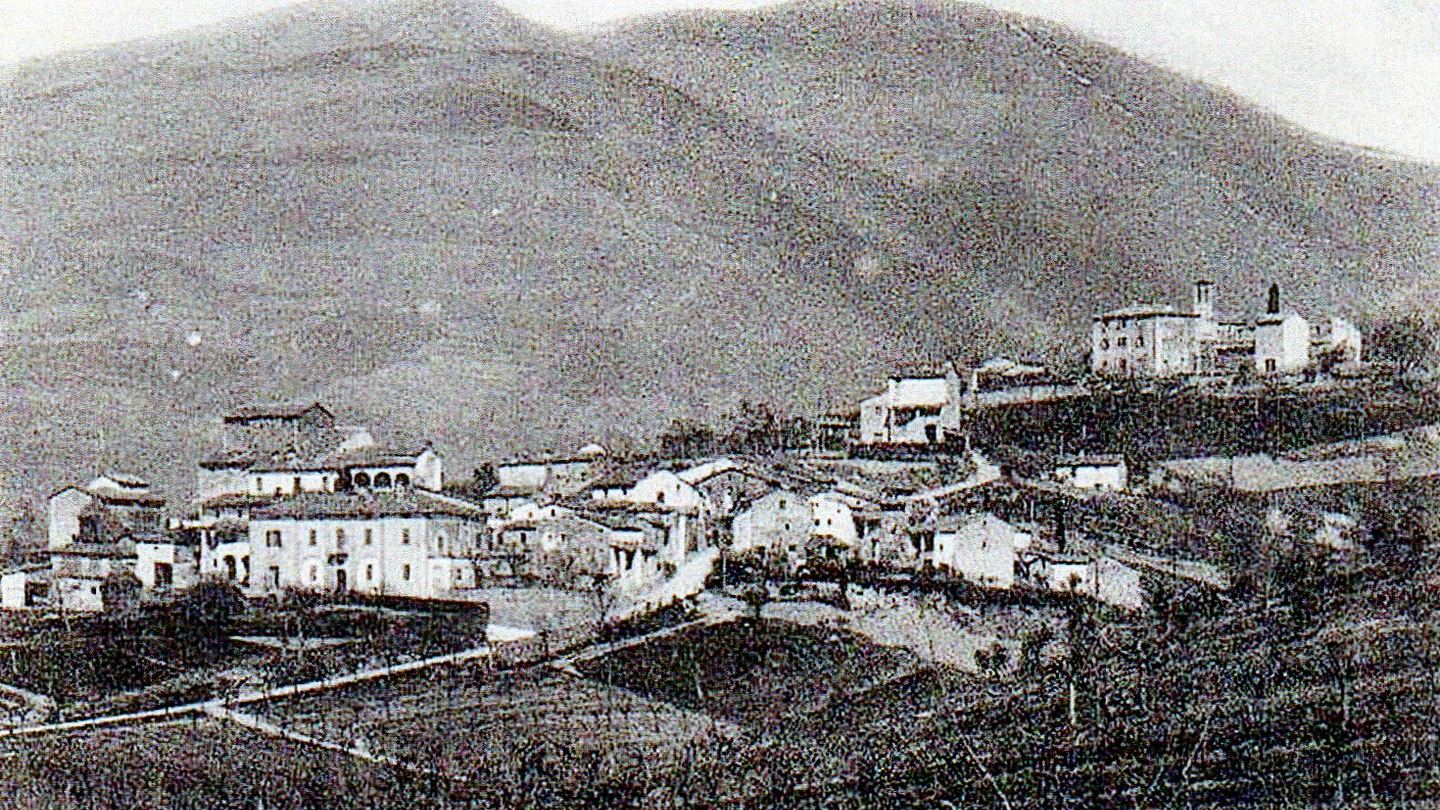
Cospaia in a historic postcard. Riccardo Pizzardi, Public domain. Cropped for layout.

The town inside Switzerland
Campione d'Italia is an Italian enclave inside the Swiss canton of Ticino. It entered the EU customs territory on 1 January 2020 but remains outside the EU VAT territory. Instead it applies ILCCI, a local consumption tax aligned to Swiss VAT: the ordinary rate is 8.1 per cent, with reduced rates of 3.8 and 2.6 per cent for listed operations. If you go, go for the anomaly, not the casino.
SourcesEUR-Lex · Comune di Campione d'Italia3
- EUR-Lex · 19 March 2019
the territory of the Italian Republic, except the municipality of Livigno
- EUR-Lex · current consolidated text
This Directive shall not apply to ... Campione d'Italia
- Comune di Campione d'Italia · updated 21 April 2026
nella misura dell’8,1 per cento ... ridotta al 3,8 o al 2,6 per cento
The valley that does not pay VAT
Italian law declared Livigno a duty-free zone in 1910. Current European law names it as the exception to Italian customs territory and excludes it from both the EU VAT and excise regimes. That is the legal basis for the difference you see at its shops and fuel stations; travellers still have customs allowances when taking goods out.
SourcesCamera dei deputati · EUR-Lex4
- Camera dei deputati · 13th legislature
Il territorio di Livigno fu dichiarato zona extradoganale con la legge 17 luglio 1910, n. 516.
- EUR-Lex · 19 March 2019
il territorio della Repubblica italiana, a eccezione del comune di Livigno
- EUR-Lex · current consolidated text
This Directive shall not apply to ... Livigno
- EUR-Lex · 19 December 2019
non si applicano ... Livigno
A republic created by a clerical error
In 1441 Pope Eugene IV pledged Sansepolcro to Florence against a loan of 25,000 gold florins. Commissions redrawing the border used a stream called the Rio but overlooked that two streams had the same name, leaving Cospaia between them outside either jurisdiction. Its one written rule survived above the church door: perpetua et firma libertas. The two governments signed the partition instrument on 11 February 1826; it took effect on 28 June.
SourceSIUSA, Ministero della Cultura1
- SIUSA, Ministero della Cultura · revised 7 January 2013
con pubblico istrumento dell’11 febbraio 1826 ... proclamarono la spartizione della Repubblica
A border that moves
The Italy-Switzerland boundary measures 800.22 kilometres including the Campione d'Italia enclave. Of its 578 kilometres of watershed, only about 40 cross permanent snowfields or glaciers. Where the boundary follows a glacier ridge, a 2009 agreement makes it follow progressive natural changes. At Furggsattel above Zermatt, measurements showed a shift of 100 to 150 metres between 1940 and 2000.
Sourcesswisstopo · Swiss Federal Department of Foreign Affairs3
- swisstopo · 8 January 2024
Italia 800.22 km, incl. enclave di Campione d’Italia
- swisstopo · 8 January 2024
Dei 578 km di linee spartiacque ... solo 40 circa si trovano su campi di neve o ghiacciai.
- Swiss Federal Department of Foreign Affairs · 19 August 2009
questa segue i progressivi cambiamenti naturali della linea di cresta
A treaty with a sovereign religious order
In March 2025 Italy ratified an agreement with the Sovereign Military Order of Malta. The Order describes itself as a lay religious order of the Catholic Church and a sovereign subject of international law. It maintains diplomatic relations with 115 states; about 500 of its diplomatic passports are in circulation. Its government seat is the Magistral Palace on Via dei Condotti in Rome, one of two institutional seats granted extraterritorial rights by Italy.
SourcesGazzetta Ufficiale della Repubblica Italiana · Sovereign Order of Malta4
- Gazzetta Ufficiale della Repubblica Italiana · published March 27, 2025
Evidence note. Parliament authorized ratification of the agreement between Italy and the Sovereign Military Order of Malta.
- Sovereign Order of Malta · accessed September 13, 2026
Evidence note. The Order states its religious and international-law status and explains the extraterritorial rights of its two institutional seats in Rome.
- Sovereign Order of Malta · accessed September 13, 2026
Evidence note. The official page reports diplomatic relations with 115 states and about 500 diplomatic passports in circulation.
- Sovereign Order of Malta · accessed September 13, 2026
Evidence note. The official page identifies the Via dei Condotti palace as the government seat and records its extraterritorial rights.
An Albanian language preserved village by village
Arbëreshë communities settled in Italy in several waves between the fifteenth and eighteenth centuries, not in a single migration after 1468. Their language, arbërisht, is an old variety of Tosk Albanian whose forms vary from place to place. Italy's 1999 minority-language law protects Albanian. The Ministry of Culture's heritage institute describes fifty communities; the law itself does not enumerate them and instead assigns territorial delimitation to provincial and local procedures.
SourcesCentral Institute for Intangible Heritage, Ministry of Culture · Gazzetta Ufficiale della Repubblica Italiana4
- Central Institute for Intangible Heritage, Ministry of Culture · accessed September 13, 2026
Evidence note. The institute dates Arbëreshë settlement to several waves from the fifteenth through the eighteenth centuries and refers to fifty communities.
- Central Institute for Intangible Heritage, Ministry of Culture · accessed September 13, 2026
Evidence note. The institute describes arbërisht as an old variety of Tosk Albanian and notes local variation.
- Gazzetta Ufficiale della Repubblica Italiana · December 20, 1999
Evidence note. Article 2 names Albanian among the historic linguistic minorities protected by the Republic.
- Gazzetta Ufficiale della Repubblica Italiana · December 20, 1999
Evidence note. Article 3 assigns territorial delimitation to provincial councils following local procedures; it does not contain a national list of communities.
None of these are secrets. They are simply things that no one thinks to tell you, because to an Italian they are just how the map works.